One Stole.
Every Season.
Every Meaning.
Custom liturgical stoles, church-year designs and direct-to-garment printed stoles created for pastors, priests, ministers, worship leaders, churches and faith communities across South Africa, Sub-Saharan Africa and internationally.
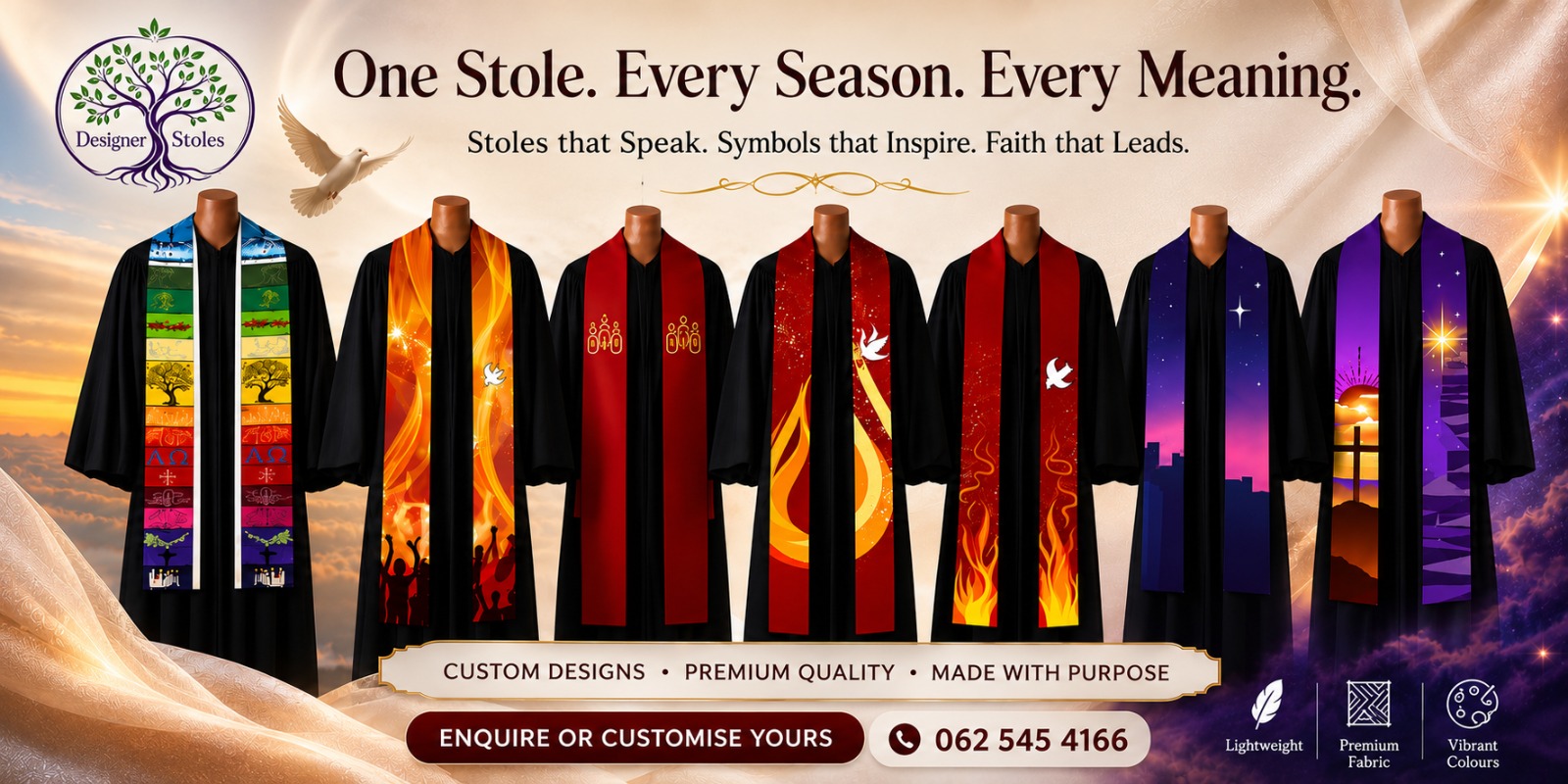
Faith, Colour and Craftsmanship
Designer Stoles creates meaningful liturgical stoles that help make faith, calling, symbolism and the church year visible through thoughtful design and quality craftsmanship.
Our Story
Designer Stoles began in 2018 as a family-driven venture inspired by a passion for creating unique and meaningful liturgical stoles. What started with hand-painted designs has grown into a specialised design and direct-to-garment printing service for churches, clergy and faith communities.
Every stole is created with purpose. From colours and symbols to scripture, ministry themes and church-year meaning, each design is developed to reflect the calling, identity and sacred responsibility of the person wearing it.
We supply customers throughout South Africa, Sub-Saharan Africa and internationally, supporting churches, clergy, ministers, worship leaders and faith communities with custom liturgical stole designs.
- Custom liturgical stoles for pastors, priests, ministers and worship leaders
- Pre-designed stoles for church seasons, services and special occasions
- Church-year colours and symbolism products
- Group orders for churches, institutions, conferences and ministry teams
- Direct-to-garment printing for detailed, vibrant and durable designs
Every Colour Carries Meaning
Explore Designer Stoles across the full liturgical colour spectrum. Each collection reflects worship, church seasons, sacred symbolism and the message carried by the wearer.

Blue Stoles
Blue represents hope, truth, expectation, peace and heavenly symbolism.
Advent • Hope • Truth • Expectation
Pink Stoles
Pink reflects joy, encouragement, compassion, celebration and spiritual renewal.
Joy • Compassion • Renewal • Celebration
Black Stoles
Black may express solemnity, mourning, remembrance, sacrifice and sacred reflection.
Memorial • Mourning • Reflection • Remembrance
White Stoles
White represents purity, holiness, resurrection, innocence and sacred celebration.
Easter • Christmas • Baptism • Resurrection
Gold Stoles
Gold represents celebration, glory, joy, victory and the majesty of Christ.
Christmas • Easter • Celebration • Glory
Grey Stoles
Grey reflects humility, contemplation, transition, balance and quiet reverence.
Reflection • Transition • Humility • Reverence
Red Stoles
Red represents the fire of the Holy Spirit, sacrifice, courage and the blood of Christ.
Pentecost • Martyrs • Passion • Spirit
Purple Stoles
Purple represents preparation, repentance, reflection and spiritual discipline.
Advent • Lent • Kingship • Mourning
Green Stoles
Green represents growth, life, discipleship, faithfulness and the ongoing work of God.
Ordinary Time • Growth • Life • ServiceOrder Your Designer Stole
Browse the numbered collection, add the selected stoles to your basket and generate a professional PDF invoice directly from the website.
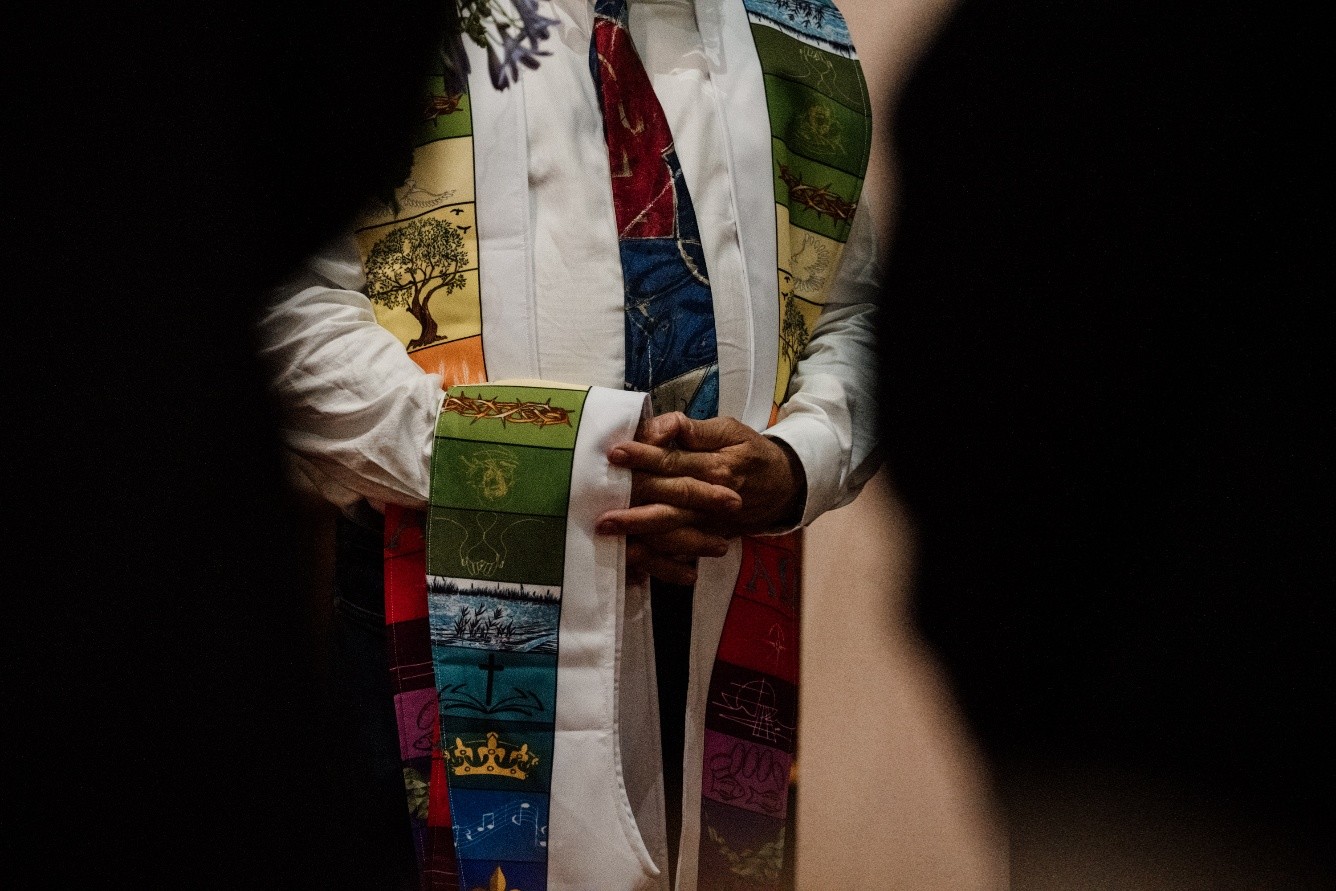
The True Meaning Behind the Colourful Stole
By Wilmi Wheeler — A teaching article on the spiritual meaning, symbolism and purpose carried by liturgical stoles.
A stole is not just worn. It represents calling.
When a minister puts on a stole, many modern eyes no longer see what the church has always wanted to show with it. The stole is centuries older. The meaning is deeper, and the symbolism is much richer than one might guess with a quick glance.
Read Full Article
When Amanda van Niekerk talks about the stoles she makes, it quickly becomes clear that this liturgical garment is much more than just a piece of material over a minister’s shoulders. For her, it is a bearer of centuries-old meaning, a visible language of the church year, and something she approaches with great reverence.
Yet there is a persistent misconception today: that the stole is a modern political flag or an identity symbol. That the bright colours equal a contemporary movement. It is simply not true.
Amanda does not smile when she hears this. She says: “People easily misinterpret. They put their own meanings on things without ever doing any research.” And that’s where the problem begins. Most people no longer know how the church year’s colours work or why they’ve existed for centuries.
The stole has a rich tradition that the modern eye has simply forgotten. The colours of the church year are not random, and neither are they new. They are historically established.
White stands for purity and resurrection. Red for the Holy Spirit and Pentecost. Purple for mourning, kingship and preparation periods such as Advent and Lent. Green for growth and hope. Gold for Christmas Day, blue for truth and expectation, pink for joy, black for the sobriety of Good Friday.
It is a coded calendar and a theological framework that guides congregations around the world throughout the year. No single colour ever functions alone. The colours are always within a bigger rhythm of worship and meaning.
For Amanda, this symbolism broke open years ago when she had to design a stole for the first time. At the time, she realised how few ordinary members know about this language of colours and symbols.
When she talks about the symbols she puts on her stoles, one hears the theology woven into them. The tree, her favourite, represents life to her: one trunk, many branches, many roots. “This is the church,” she says. “A body with many members.”
Other symbols carry just as much meaning: waves for the Sea of Galilee, bread and fish for provision, the crown for the identity of the believer, the lamb for Christ himself, the compass for the guidance of the Lord, the river for living water, the dove for blessing, wheat for harvest and abundance.
The symbol is not just art. It is ministry. The reason Amanda makes a stole is not simply to create a beautiful garment. She knows that every time she sees a photo of a young minister standing in the pulpit on their first Sunday with the stole she made, the moment carries deep weight.
The solution, Amanda believes, is simple: people need to learn again. And they must be willing to learn.
Ultimately, she says, the stole is an invitation. Also, a reminder of the story of Christ. Of expectation in Advent, of repentance in Lent, of joy at Easter, of the Spirit at Pentecost, of growth in Kingdom time.
It is a garment that makes the minister’s calling visible. It is a garment that emphasises the oldest message of the church: He came, He died, He rose, He is the way and we follow. This is HIS story!